



When I left off, our beer was sitting in a carboy. In total, it spent 14 days there. The first several days were fascinating to me — I liked hearing and watching the yeast do its work. The color of the beer changed and the bubbles gradually stopped. After the beer had done its time in the carboy, it was time to bottle. Here is where some real work came in. From start to finish, it took us three hours.
The bottles had first been soaking in Oxy-Clean, to remove labels and give them an initial cleaning. We pulled them out, rinsed them, and put them in a drying rack. From there, we formed a small assembly line (just the two of us) and washed each bottle with a brewing cleaner, Straight A, and a bottle brush. Then they were rinsed with a Jet Carboy and Bottle Washer faucet attachment, dipped into a sanitizing solution called Star San, and set onto a bottle tree to drain. We then took each bottle off of the rack and placed a carbonation drop (which looked like a white lemon drop, made of corn sugar) in each bottle, in preparation for filling. The drops give the remaining yeast just the right amount of fuel to carbonate the beer. Many homebrewers instead dissolve about a cup of corn sugar in hot water and add that to the bottling bucket before racking the beer into it to achieve the same result, but our supplier sold us the carbonation drops as a simpler method. It certainly was simple.
Filling and capping the bottles was definitely the most challenging part, in my view. First, we “racked” (siphoned) the beer from the carboy into a bottling bucket. We quickly determined that I was not the best candidate to put the caps on, which required a little more arm strength, so I was the filler. The challenge of filling the bottles was getting the siphon tube started, which is pretty tricky to do — keeping in mind that sucking on the tube is not recommended, due to potential bacterial contamination of your bottled beer. One end of the tube is attached to a “racking cane” and inserted into the beer. To the other end is attached a bottle filler tube with a little trigger valve. After we got the beer flowing, I gently pushed the mechanism on the tip of the tube to the bottom of the bottle, which allowed the beer to flow, filling the bottles. Then I would hand the bottle to my husband, and he would cap the bottle and put it in the beer box.
Though Charlie Papazian’s book recommended at least ten days in the bottle to allow for carbonation and clarifying, our first taste-test took place at the 6-day mark, exactly. We were dying of curiosity. The results? Well, first let me drag this out a little more to torture you. To back up a little, I have always considered myself to be more of a “wine” person than a “beer “person. I like the complexities of wine, for instance, detecting the fruit flavors, varying degrees of spiciness, its finish, etc. I never got that from beer.

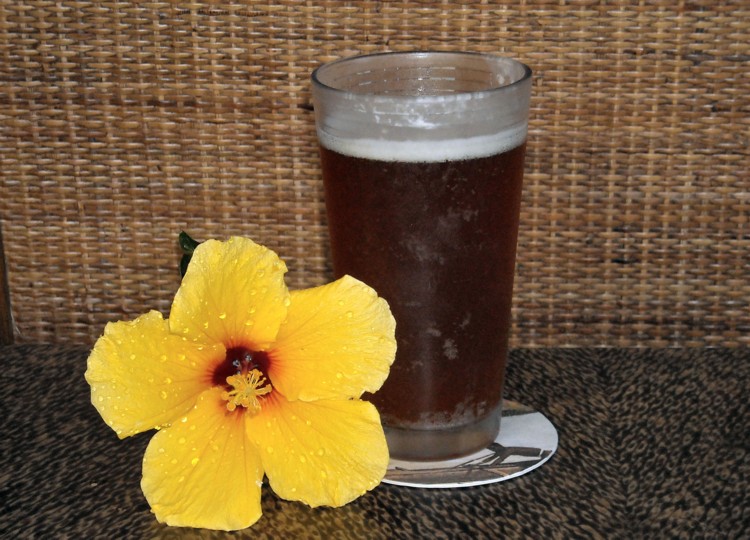
So, the result? Homebrewed beer, prepared correctly, is FANTASTIC. I tell you, folks, this has got to be one of the most fun home hobbies, ever. Let’s start with the color. We made a pilsener, but with an ale yeast, due to our room-temperature brewing. I would describe the color of the beer, when poured, as a sort of tawny amber. (I had been expecting something lighter, based on true, commercial pilseners I have bought at the store.) I had not expected the beer to have a malty, creamy, flavor to it, but it does. There was another factor I had not anticipated: complexity. It’s interesting. It is not the beer of Super-Bowl parties I have attended. It was, though, even better after the ten-day mark. The carbonation was of a finer quality and the brew seemed more rounded.
In my previous post, I mentioned that homebrewing was a great male bonding experience. One of my commenters lamented this statement as sexist, and I can now reassure her that it’s just a fun bonding experience, period. We had a great time, although at moments it did get a little tense, due to our inexperience. At one point we were sitting on the dining room hardwood floor, both trying to figure out how to get more comfortable and yet keep up our little assembly line. We had to laugh at ourselves.
One other item I want to point out: there is a large world-wide homebrewing community out there — and what a supportive group! I have a lot of hobbies, but have never before experienced the degree of helpfulness and instant camaraderie in learning how to do something that we have experienced in getting into homebrewing. My original post commenters were great — I received helpful e-mails — and the purveyors of equipment and supplies we’ve met and spoken with on the phone are supportive and positive. We just missed our island’s homebrewing competition, but you can bet we will be there, next year, for fun.
Finally, the cost. The original estimate for equipment was $180. After our difficulty with the siphoning process, we bought an “auto-siphon” to get the beer out of the carboy, and we bought a spigot for our bottling bucket. We also bought a “bottle tree” (my husband made the first bottle drying rack, because both local homebrew shops were out of them). The cost of these items was $60, bringing our investment to $240. Our theory, when embarking on a new project, is that if you don’t have the right equipment, it makes the project more difficult — and less fun — so you aren’t as likely to do it again. If you buy the right equipment, which makes the job easier, you are more likely to do it. We used this approach with canning and gardening and it has been borne out by our experiences.
What’s next? Tomorrow, we start a lager. Also, as some previous post commenters suggested making hard cider, my husband decided he’d give that a try, having sampled those and enjoyed them in the past. Tonight we will give a party and share beer with the neighbors who worked so hard to empty bottles for us.
All in all, I would definitely recommend homebrewing. The product can be superior, it can be cost-effective over the long-haul, and it is really fun. As Charlie Papazian writes in The Complete Joy of Home Brewing, “Relax! Don’t worry. Have a homebrew.”
Disclaimer: The links and mentions on this site may be affiliate links. But they do not affect the actual opinions and recommendations of the authors.
Wise Bread is a participant in the Amazon Services LLC Associates Program, an affiliate advertising program designed to provide a means for sites to earn advertising fees by advertising and linking to amazon.com.







Welcome to the world of Homebrewing!!
I've done several batches over the last few years (with Charlie Papazian at my side) and find it to be a great hobby. When people find out I brew (or am brewing) they go nuts with questions and requests to join in which is also great fun.
One thing I recommend is slowly investing into the flip-top bottles - I do the one liter ones. It cuts down on the number of bottles and speeds up the bottling process. If I'm making something for a party I still do the regular beer bottles but if somethings for my own personal consumption I do the big ones to save space and time.
Anyway - relax and enjoy your homebrew! Cheers,
WB, thanks for your comment. Gotta check out the flip-top bottles. Cheers to you!
Pretty cool stuff. I've always been curious about the homebrewing thing. I'm not sure I have the patience, though. And then I think I'd be afraid to try it. And then, what if it's no good, then all that work for crappy beer. I can go to the store and get crappy beer in 5 minutes for $15 a case. Hahaha, it sounds like your experience was well worth it, though. Kudos to you!
Matt, thanks for your comment. Believe me, it was definitely well worth it. Can't wait to see how the lager comes out. If there is a homebrewer's store or group in your area, they are extremely helpful.
Marla and spouse: I sanitize my bottles by soaking them in bleach water (2 TBL per 5 gallons), rinsing thoroughly using a bottle washer which fits on the sink faucet and squirts hot water into each bottle, then putting the rinsed and drained bottles into the oven. I slowly raise the oven temp to 300 degrees and leave it there for 1/2 hour. I turn the oven off and let the bottles cool naturally. I sanitize the day before I plan to bottle, so the bottles will be cool to touch. If you plan to reuse your bottles, always rinse them after you (or the neighbors) drink the beer, to ger rid of any lingering film of beer or yeast. Your enthusiasm is delightful, and I'm glad your first batch of beer turned out well. Keep us posted....By the way, I almost always sneak a taste of my homebrew before it conditions a full ten days in bottles. Just can't stop myself. Helene Jackson, McNeal AZ
Helene, thank you for your tips! Very helpful to us as we work out our brewing system. I laughed when I read how you sneak a taste, too. Mahalo!
Ahh, home brewing. A topic close to my heart. I've been brewing my own for a while now and it's great. Like you said, it can be done cheaply, but it's an addicting hobby that has plenty of potential to become costly. I should know. After making a number of batches with my very basic setup I've gone on to spend probably $2,000 on gear, kegging, and anything else you can think of. Not frugal by any means, but I've moved on from brewing for the sake of saving money to brewing because it's fun and I love creating an awesome product while challenging myself to always create something better.
Jeremy, tx for comment. I see what you mean about the challenge to always create something better. The combinations are seemingly endless. It is almost a little overwhelming, when you consider the possibilities. Then, there is the satisfaction of having done it yourself.
I've never done beer, but this year and last made dandelion wine. I used an old fashioned family recipe off the internet and rather unprofessional equipment. Two gallon pickle jars sterized with bleach and hot water, rinsed, air dried. Regular baker's yeast, cane sugar, an orange and a lemon, a pound of raisons, besides the water and dandelion flowers. Some fish tank tubing (also washed out with beach water and rinsed to siphon it out into a bunch of oddball bottles. It still turned out well. It is fun and makes great gifts.
I know someone else commented on bottle prep, but what saves me time (and many other homebrewers) is using the dishwasher to sanitize bottles. Just put your bottles into the dishwasher run them at high heat with heated dry. Spay a little sanitizer in the bottle before you fill and your done. The whole bottling process usually takes me about an hour including cleanup.
One other valuable tip is to work over the dishwasher door. This eliminates most of the cleanup.
Oh, forgot to mention.... DO NOT USE SOAP WHEN USING THE DISHWASHER METHOD. This will kill the head on your beer.
The DISHWASHER! No way!! Thanks, Kevin!
Marla,
Great chronicle of the beginning of a fun hobby. You're right - homebrewers are a happy, helpful lot. To Matt Maresca: Jump on in! The beer is fine!
Yeah I just bottled my 5 gallon batch this past Friday, I split the batch to be a Carmel Ale and a Blueberry Ale. My father he does Meads. And a good friend of mind also does beer.
Keep in mind with the Lager, I heard the yeast used for it has to stay cool while it ferments.
Hi!
I have been homebrewing for 3 years now and second the recommendation to get flip top bottles. Also, consider 22oz bottles, half the work at bottling time. Consider taping up your carboys with clear packing tape so that if you drop it or somehow break it, you don't risk serious injury. I dropped one of mine and know several people who have had serious injuries from broken carboys. Finally, consider brewing a stout or porter for your next brew. If you aren't able to keep the beer below 50 (f) for at least 6 weeks, lagers may not bet the best choice.