

Feed items
Limited income, big family, major savings: Meet the Economides clan
When Steve and Annette Economides got married in 1982, they made a conscious decision to always live below their means. The couple from Scottsdale, Arizona, even made the pact a part of their wedding vows.
Then the car broke down.
This is usually the part in the story where taking on a little bit of debt seems perfectly OK to do. After all, Americans collectively owe nearly $12 trillion in outstanding household debt. Sometimes other alternatives are simply out of reach.
In this case, though, Steve was able to ride a bike to work, so he did – for a solid month. And they saved even harder.
“Friends lent us an occasional vehicle over weekends,” Annette Economides said. “They’re still good friends of ours.”
Ready to declare financial independence?
This article is by staff writer Lisa Aberle.
When will you declare your independence? Your financial independence, that is. What is financial independence?
Ah, financial independence — the freedom to work only if and when you want to (because you no longer need the paycheck you earn from your job).
Even typing the word “freedom” makes me sit up a little straighter.
I am sure you can think of amazing things to do when you no longer need to punch a clock.
Still want to punch a clock? Think how rewarding you will find your job if you want to work but don’t have to.
How can you become financially independent … more quickly?
-
Spend a lot less than you make and invest the difference in something
How much do you spend on fireworks?
This article is by staff writer Holly Johnson.
A few weeks ago, I received a flyer from a fireworks store that made me shake my head. “Spend $400 in one purchase and earn 40% off for the rest of the season,” it read.
“What a bargain,” I thought as I flung it toward the recycling bin. I mean, does anyone really spend $400 at the fireworks store?
Then I remembered that, yes, many people do. Not only are most of my neighbors fireworks fanatics, but dozens of people I know do it every year, including people in my own family.
My uncle, for example, has been known to buy thousands of dollars in fireworks and put on a show for my entire extended family. The kids swim in the pool, we cook out, and he lights up the sky to the delight and giggles of all the little ones.
The good side of quitting
This article is by staff writer Richard Barrington.
Does quitting have a bad rap?
When it comes to the job market, quitting is happening more these days than at any time in the past several years. We tend to associate quitting with giving up or giving in, so you may be surprised to learn that economists are very happy when people quit.
This might be a good time to consider why economists like it when you quit your job, and how you can make quitting work for you.
Why economists like it when you quit
The Bureau of Labor Statistics measures the rate at which people quit their jobs, and lately the year-over-year average of this quit rate has been 1.9 percent. That is the highest it has been at any time since the Great Recession. Economists generally view a rising quit rate as good news for two reasons:
Ideas for a cheap vacation
This article is by staff writer William Cowie.
It’s been a long time since my wife and I had the luxury of thinking in terms of vacation. When we came to America more than 30 years ago, we also discovered two things:
-
People in America work very hard, probably harder than anywhere else in the world. Two weeks’ vacation seems to be the norm here, while in Europe and the rest of the world anything less than a month is inhuman, insane, or both. (I am not convinced they’re wrong, by the way.)
-
With all our family on other continents, we needed to spend those two precious little weeks every year with them. That led to employing all manner of strategies and devices — like accumulating as much vacation time as we could and squeaking out an advance on the coming year — so we could spend two whole weeks with our family and another week just for travel, there and back.
How do you establish the value proposition for personal growth?
This article is by staff writer Ryan Takach.
I spend a lot of time working toward my financial goals, but lately I’ve been thinking about personal growth. I’m at an inflection point in my financial plan. I don’t run any debt balances. I feel I’m saving enough and making smart investments. I believe I can afford to shift some focus to other interests.
I started reading more by checking books out from the library. I also started exercising on a regular basis, which was difficult to do at first but eventually became an activity that I crave. There are so many other things I’d like to do, though — like learn a new language, tend a more robust vegetable garden, or learn to surf.
How we saved big with a balance transfer
This article is by staff writer Holly Johnson.
When my husband and I started dating in 2004, he moved across the country to go back to school and live closer to me. Yep, much to our surprise {insert sarcasm here}, his bachelor’s degree in theater arts hadn’t helped him land his dream job. Therefore, he decided to do something different instead and chose to pursue a bachelor’s degree in mortuary science.
As it is with any life-changing decision, this move had financial consequences. Still, leaving Chicago was mostly a good thing. Not only would he have a chance at a more lucrative career, but it also meant slowing down and abandoning an excruciatingly high cost of living. On the other hand, moving to Cincinnati to finish school meant taking on student loans which severely limited his income for two years.
7 things camping can teach you about money
This article is by staff writer William Cowie.
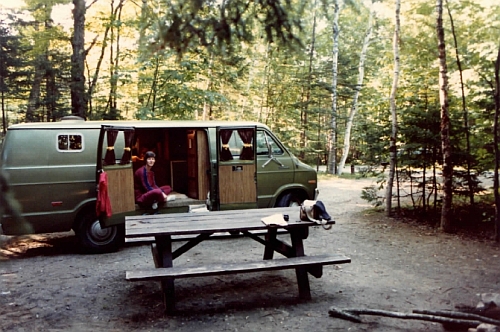
My wife and I are new to camping. Well, it sure seems that way. When we came to America over 30 years ago, we bought Kermit, our green camping van, which we took coast to coast three times.
We were young, our hair still had color. And we (being students) had time enough to see all the states (except, for some unexplained reason, West Virginia). But then, what I playfully call the American experience got hold of us: Work, work, work — no vacations, trying to get ahead, not being as financially responsible as we should have been. Before we knew it, 30 years had gone by … and we had forgotten such a thing as camping even existed. Because of work, our travels changed to ritzy resorts all over the place where we usually stayed for free (long story).
Real-life case study: Should I save money or pay off debt?
This article is by staff writer Honey Smith.
An issue was raised in the comments of my recent post, Celebrating One Year of Homeownership. In that post, I mentioned that we currently have over $30,000 in liquid savings. At least one reader felt that, with our level of debt (currently over $390,000), that this was an excessive amount and instead we should pay down some of our debt. So I thought that this was a good situation to weigh the eternal savings-or-debt debate again using my own situation as case study.
First, some updates and future plans
-
The shed: We had the old shed demolished and removed and the new shed assembled, which cost about $500.
11 ways to entertain your kids this summer for free (with stuff you already have!)
This article is by staff writer Lisa Aberle.
Are you frantically trying to smother the “I’m bored”s at your house too? Most of the country is knee-deep in their kids’ summer vacation now, and our house is no exception. Keeping our children entertained and out of mischief is a full-time (and, if I’m honest, a little overwhelming too) job. When I start feeling frazzled by sibling fights and whining, I want to cope by going somewhere and doing something that costs money.
But that’s not always necessary. I mean, when I was your age, I was never bored — Oops. Sorry about that. I got confused about who my audience was there for a second.


Facebook
Become a fan
Twitter
Follow us
RSS
Subscribe