

Money Tips Network
A Tale of Five Lamps
A few weeks ago, the desk lamp I use at my standing desk went on the fritz. I thought at first that it was just a bad light bulb, but I quickly figured out that there was something fundamentally wrong with the lamp.
At that point, I had some decisions to make. I could spend some time taking the lamp apart, figuring out what was wrong with it internally, and attempting to fix it. This actually wouldn’t be too bad of a task. I could probably fix the issue with an hour, a small set of tools, some solder, and maybe a brief trip to a hardware store.
On the other hand, I could simply buy a new lamp for my desk. The lamp I was using was purchased for a dollar or two at a yard sale and served its purpose well for a few years. Is another used lamp the right solution? Or, since I rely on it every day, should I look for a better model?
Ask the Readers: What's the Most Extreme Thing You've Done to Save Money?
Tried-and-true tips for saving money, like meal planning and carpooling, really work. But when you've scrimped and saved in the obvious places and your budget is still coming up short, it's time to get creative.
What's the most extreme thing you've done to save money?
Questions About 529s, Dollar Shave Club, Solo 401(k), Nagging Coworkers, and More!
What’s inside? Here are the questions answered in today’s reader mailbag, boiled down to summaries of five or fewer words. Click on the number to jump straight down to the question.
1. 529 for child without custody
2. Advising friends without being pushy
3. Found the furniture-selling article!
4. Notable feature of money markets
5. Never want to retire?
6. Paper journal versus Day One?
7. Dollar Shave Club or alternatives?
8. Lower APR but higher payments?
The Portland Timbers and me: A personal case study in opportunity costs and conscious spending
Saturday night, Kim and I joined 25,216 other soccer fans to watch the Portland Timbers defeat the Vancouver Whitecaps 3-1 during a crazy rare August rainstorm. (Portland gets a lot of rain…but not in early August.) The match was a lot of fun, with three terrific goals. Here. I'll share highlights with you…
I've owned Timbers season tickets since 2010, the year before they made the leap to the top league in the U.S. — but I've been a fan since 1975, when I was six years old. My earliest sports memories are listening to Timbers games on a transistor radio, cheering for the likes of Clive Charles, John Bain, and (especially) goalkeeper Mick Poole. I wanted to be Mick Poole.
Each year in August, I get my Timbers renewal letter. If I want season tickets again, it's time to purchase them.
4 Mindful Spending Habits That Will Save You Money
Spending money mindlessly is easy to do — not to mention fun!
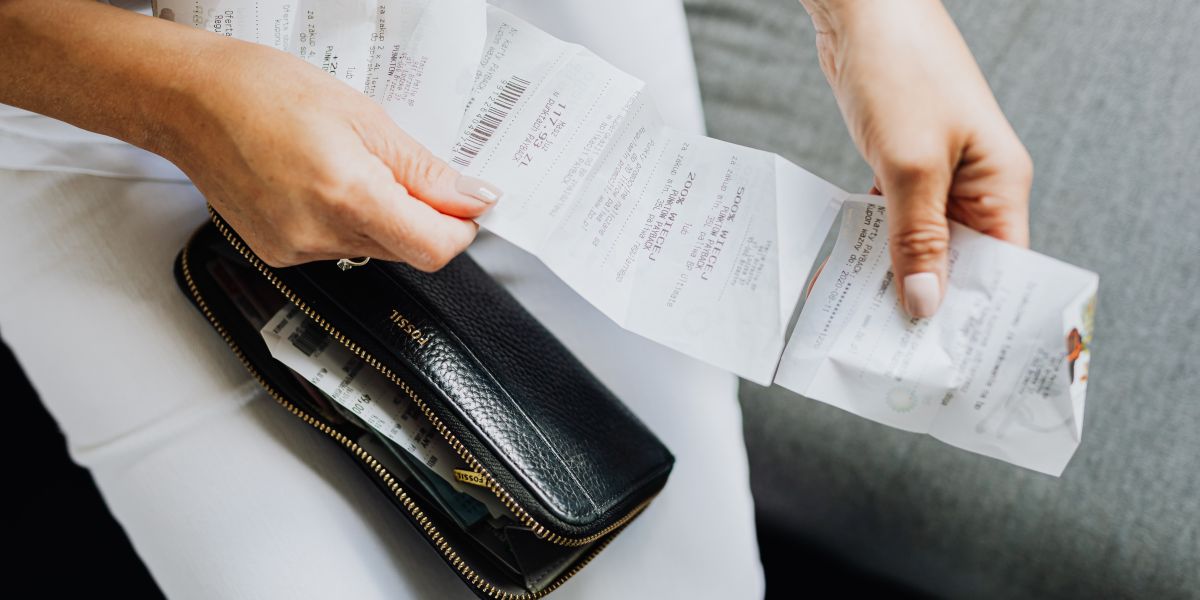
Grocery receipts for money: Stacking apps
Saving money and getting money for grocery receipts is pretty easy with receipt-scanning smartphone apps. To save more, use more apps …
With all of the news about companies finally being brought to light for making a mint off of your personal information without reasonable disclosure, it's a good thing when other companies pay you for it. It may not be much, but it is something.
Over 300 billion receipts are printed each year! Environmental impact aside, companies will pay for your information because marketers want it dearly.
Books with Impact: Atomic Habits
The “Books with Impact” series takes a deeper look at specific books that have had a profound impact on my financial, professional, and personal growth by extracting specific points of advice from those books and looking at how I’ve applied them in my life with successful results. The previous entry in this series covered The One Thing by Gary Keller and Jay Papasan.
If there’s one thing I’ve learned over the last few years, it’s that if you want to succeed at any life improvement goal, you have to alter your normal daily routine such that every single day naturally produces some progress toward your goal.
What Are Stocks? What Are Bonds?
Max writes in:
Can you explain what the difference between stocks and bonds are? Tried to read up on this on Wikipedia and other sites but it’s not clicking.
I’ve explained what a stock is in the past, but it never hurts to dig into a core idea like this again, so let’s start from the beginning.
What Are Stocks?
Stocks are tiny slivers of ownership of a company. When you own a share of stock (“stocks” is basically a short way of saying “shares of stock”), you actually own a very tiny piece of the company that stock is associated with. If you own a share of Coca-Cola, you own a very tiny sliver of the Coca-Cola Corporation.
How does that have value? There are a couple of reasons.
Seven things college freshmen don’t need — and ten they do
Those ubiquitous checklists of “dorm room essentials” for college freshmen are filled with items that will be ditched by the end of first semester.
Some parents “go to the store and grab a list like they did when their kids were in elementary and high school and just go straight down the list,” says Lisa Heffernan, mother of three sons and a college-shopping veteran. Or they buy things they only wish their students will use (looking at you, cleaning products).
You can safely skip about 70% of things on those lists, estimates Asha Dornfest, the author of Parent Hacks and mother of a rising college sophomore who’s home for the summer.
How to Decide If a Membership Is Worth the Price
Every summer, my family faces the same unanswerable dilemma: should we purchase a membership to our local pool?
This may not seem like an especially difficult question to answer, but it has us scratching our heads every year.
Personal Finance Blogs: Highlights From Our Conversation With The Plutus Awards
The Plutus Awards joined us for our #WBChat on August 8th to talk about personal finance blogs in support of their 10th Anniversary! Our #Plutus19 #WBChat featured wonderful information about personal finance blogs and how to use them to better your financial health.
Feeling the Burn Rate
When I was a little kid, my family really didn’t spend much money at all. We raised a lot of our own food with two huge gardens (and a lot of canning), my father’s side gig as a small-scale commercial fisherman, and a lot of chickens in a chicken pen. We didn’t have cable and just enjoyed five channels that we could pick up on the antenna (ABC, NBC, CBS, PBS, and Fox). We lived in a pretty small house in a rural area. Our cars were bought used and driven into oblivion, then replaced with another used car. We didn’t have cell phones or home internet or Netflix or anything like that. My mom bought almost everything in store brand form when she went grocery shopping.
In short, the actual annual expenses were pretty low. I’m willing to bet that they added up to less than $20,000 per year.
Join Our Tweetchat on Thursday 8/8, 12pm PST for a Chance to Win $300 in Prizes!
Join our Tweetchat Thursday 8/8 at 12:00 p.m. Pacific/ 3p.m. Eastern for lively conversation and a chance to win a $100 Amazon gift card or one of two $50 Amazon gift cards! Use #WBChat and #Plutus19 to participate.
This week's topic: Personal Finance Blogs!
The spend safely in retirement strategy
Last month, the Society of Actuaries (a group I was born to belong to!) published a mammoth (84-page) report entitled “Viability of the Spend Safely in Retirement Strategy”. Despite its opaque title, this report (written by Steve Vernon, Joe Tomlinson, and the estimable Wade Pfau) contains some interesting info about planning for retirement income.
On the surface, this report's advice seems stupid simple: To optimize retirement income, delay Social Security and make the most of required minimum distributions from tax-advantaged accounts. Isn't this pretty much what most of us plan to do? Maybe so, but I doubt that anyone else has crunched the numbers like this.
Selling off Your Furniture (and Other Unexpected Thoughts)
Marty writes in:
Read an article recently about a guy who sold off his furniture to start a coffee business. Seemed weird at first but then I got to thinking, why is it weird? Why did he need furniture or anything more than dirt cheap stuff?
I tried to find this article that Marty referenced without luck, but this comment really stuck with me anyway.
So much of what we consider “normal” in terms of the things we buy and own is influenced by how we were raised, what people in our lives do, and what we see in the media. We buy products, arrange our homes, eat foods, and do so many other little things in accordance with the many, many cues in our lives, starting from when we’re very young. It’s what feels normal to us.
18 Simple Financial Things I Wish I’d Done (or Started Doing) When I Graduated from College
When I graduated from college, I had moderate student loan debt and a small amount of credit card debt, but I had a solid job lined up and big dreams of establishing a strong financial foundation.
Four years later, I was married with a kid, tons of credit card debt, a car loan, additional other loans, an expensive lifestyle, and a financial situation so precarious I couldn’t keep the bills paid.
What happened? I started my life in the adult world without good financial practices and principles and that quickly led to a difficult financial situation.
I don’t look back with regret, but I do look back at those days and ask myself, “What did I mess up? What do I wish I had done differently?”
Ask the Readers: Are You a Crafter?
Crafting is a great way to express your creativity and, in many cases, make something you can use, gift, or sell. And there are so many kinds of crafts! Ceramics, knitting, woodworking, jewelry-making, metalsmithing, leatherworking...the list just goes on!
7+ tricks to maximize your Ibotta cashback
I use the cashback app Ibotta to save on groceries. Here are tricks to making sure that you maximize your savings …
To date, I've earned over $160 cashback with Ibotta.
Saving money with Ibotta goes like this:
- Install the app on your phone.
- Select the items with cashback deals you want.
- Go shopping and buy the items.
- Scan your receipt.
- Get your cash when you reach $20.
And that's it. It's a bit like couponing without the coupons.
How to do Ibotta by the book
That's how things are supposed to work, anyway.
Questions About Capital One, Glass Food Containers, Home Maintenance, Birthday Cakes, and More!
What’s inside? Here are the questions answered in today’s reader mailbag, boiled down to summaries of five or fewer words. Click on the number to jump straight down to the question.
1. Money market versus savings account
2. Birthday cake as frugality lesson
3. Big 401(k) contributions, then stop?
4. Glass or plastic food containers?
5. Happier before financial improvements
6. Basic homeowner tool kit
7. Why not choose lowest payment?
8. True “everyday carry” question
Inspiration from Arnold Toynbee, Bagel Sandwiches, Masego, and More!
Once a month (or so), I share a dozen things that have inspired me to greater personal, professional, and financial success in my life. I hope they bring similar success to your life.
1. Viktor Frankl on living as though this is your second chance
“Live as though you’re living a second time and as though the first time you lived, you did it wrong, and now you’re trying to do things right.” – Viktor Frankl
This is something I find myself doing, except I use earlier stages of my own life as the “first time I lived” and now I’m “trying to do things right” as much as I can in the various areas of my life.
I messed up my finances badly in my twenties. I messed up some interpersonal relationships. I messed up some aspects of my health.
I want to do those things right this time. I saw what impact those bad moves had and can see from the examples of others what that can mean over the long term.


Facebook
Become a fan
Twitter
Follow us
RSS
Subscribe