

Paper Checks: Going, Going...Gone?


Photo credit:
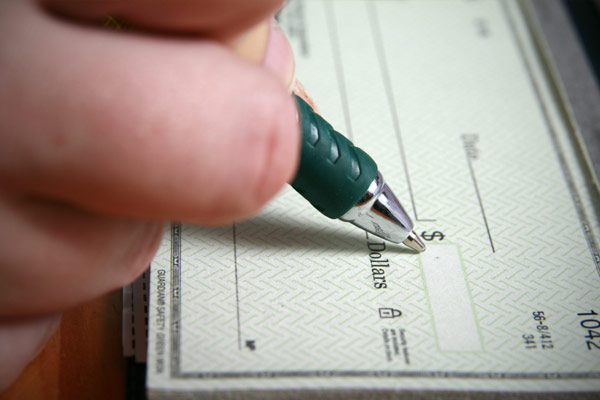
RikkisRefugeOther Many Americans still retain a checking account for the purpose of writing actual paper checks. Consumers continue to use paper checks out of habit, convenience, security, or having no other option with a vendor. But there are big changes on the horizon that may cancel the use of personal checks or paper checks in general. Are you ready to go paperless? (See also: Why I Still Write Paper Checks)
Who’s Changing and Why?
Many creditors, lenders, utility services, and even federal and state government agencies are shying away from issuing or receiving paper checks. For instance, those who receive child support payments now do so through a debit card and direct deposits. Banks and other vendors are offering incentives for customers to go electronic. Paper statements and paper checks are becoming a thing of the past.
The move to electronic payments and direct deposits essentially all comes down to the cost factor. In order to save money and cut expenses, state and federal agencies especially are making the switch. There is more cooperation between banks and government agencies to keep programs moving forward and organized.
While some feel the move is not such a great idea, there are benefits for both sides. Vendors benefit because their overhead is lowered. For consumers, the receipt of child support payments or unemployment benefits is seamless. No more waiting for the mailman or worrying over lost or stolen checks. Payments are now being made via direct deposit onto a debit card issued by the agency responsible for payment. For each payment, cards are reloaded automatically.
What to Watch For
While cost and convenience are certainly pluses to both vendors and consumers, this changes the rules. Without understanding the changes, consumers will likely end up making mistakes that will cost them cash because they didn’t know any better. Here are some essential things you need to know about going electronic:
Unexpected Fees
Most governmental agencies do not charge a fee for money being reloaded onto a card. This may be the case now but not always. In the case where you receive a refund or a rebate from a retail store or other entity, funds issued through a debit/credit card may not be fee-free. You may have to pay fees for each transaction you make or for reloading a card with new funds. There may also be additional fees for use at an ATM or for maintaining an inactive card. Check with the terms and conditions of the card in refund situations. It may be better to ask for a store credit rather than getting stuck with fees and losing your access to the full amount you are owed.
Balance Checks
With some cards you may incur a fee for using your card in any capacity at an ATM, including for a simple balance transfer. Find out if you are going to be charged for balance checks done over the phone or the Internet. If fees are incurred, it would be smart to keep tabs on your expenditures on a piece of paper rather than lose cash to a series of fees. This is also key because if you go over the amount of funds on the card when making a purchase, your card will either be declined or you’ll be hit with a pretty significant overdraft fee for each transaction you make over your limit. Not only will you be out of funds, you’ll be responsible for paying the overage charges.
Keeping Your Card Safe
While a plastic card may be much more convenient than a paper check, there is still a risk of having it stolen or losing it. A lost card may cost you up to $25 to replace, so make sure you keep your card in a safe place at all times. Not only do you face fees, you’ll also lose access to your funds during the processing time.
Online Security
If you are making payments to vendors such as your utility companies, mortgage lenders, or loan providers, be very careful about your online security measures. While most banks and legitimate vendors will have established a thoroughly secure system for accepting payments online, you must make sure your own computer is safe. It is not advisable to store passwords online or on your mobile phone because of the potential for identity theft.
Card Rules
Federal assistance programs and refunds issued through debit cards may also come with special use rules that you need to understand. There may be limitations to what you can use the card for, and you need to be prepared to follow such rules. For instance, government programs such as food assistance programs will only allow for certain purchases to be made on the card. You may also only be able to use your card for a certain amount of transactions within a month’s time period.


Disclaimer: The links and mentions on this site may be affiliate links. But they do not affect the actual opinions and recommendations of the authors.
Wise Bread is a participant in the Amazon Services LLC Associates Program, an affiliate advertising program designed to provide a means for sites to earn advertising fees by advertising and linking to amazon.com.


Over here in Europe they've been check-free for years! Most don't even use credit cards, just a debit card w/a PIN that you can use at almost any store. The rest of the bills are paid via computer at home. We get a special little thing that looks like a calculator...put in a PIN code and a unique transaction code pops up that you can use for only one transaction (and next time you use it, another unique code pops up)...it's not enough to use your user name and password to access your online account...you need this little calculator thing too.
Most Europeans also have credit cards with a PIN. I heard the USA is behind in this technology, because it would cost millions of dollars to upgrade their systems to do this....but then again, aren't they already losing MILLIONS by all the fraud???? If a European loses his credit card, the thief would still need the PIN to access it.
I just don't understand it...
Gee, your list of issues to deal with make a much better case than I came up with—and I was talking about why I *was* sticking with paper checks!
It's simple. Many many vendors continue to ONLY accept checks (some wont even accept cash!). Only reason I keep checks. Otherwise its all electronic bill pay, credit cards (with better credit protection), or good old 'merican cach.
I have a checking account and I write 1 check per week, in an average week. My daycare doesn't take credit cards.
Paper checks are also necessary for school activities and fundraisers, since I don't want to send cash in my kid's backpack.
i havnt written a check in years. Okay, one or two for taxes to avoid online fees, but online banking saves so much money on the wallet! If my bank wants to pay for postage, who am i to stop them :-)
I don't think people like our plumber or electrician take anything except checks. Well, they would probably take cash, but I'm not likely to have hundreds of dollars of cash around.
now, if checks go away, how do I pay my roomate back for odd amounts of money borrowed? banks charge a fee to transfer elelectronicly, as does paypal.
Again, USA can get a lesson from Europe. It's not unusual that when you get a bill, the bank "routing" and person's account # are already on the form attached to the bill. All you have to do, is do online banking to transfer money to their account, or you can do it at your bank or their bank.....these transactions are FREE.
It's a very minor issue because my bank gives them out free but I keep running out of checking registers. It's kind of funny, I'm still on the same book of checks yet I'm on about the tenth register book. I don't write a check more than a few times a year but I still use the paper register log that comes with them. I know I could use software for that but I like the paper log.
I do agree that receiving payments electronically is much easier than paper checks. It can be done automatically also so that your payments are never late either, thus avoiding further fees.
Hey at least with checks the small businesses in your community don't pay ANY swipe fees.
That means more money stays in your community.
Plus, checks can be a useful tool for people who have a hard time using plastic payment responsibly. When you're forced to write down what you're spending, you're less likely to overspend - not to mention - you won't go into debt.
I'm not saying checks are the answer to everything. But there are plenty of good reasons to keep them around.
I doubt the Girl Scouts will be walking around with credit card machines. You won't find them installed in the pews at your church either. Where do you plan to swipe your debit card on the babysitter?
I'm just sayin'!
I was just telling my husband how I really don't like checks. I can't stand if someone doesn't cash it right away!!