

Save time, money, energy, and eat great


Photo credit:
Amazon.com Depending on how old you are, your mother or grandmother probably had one of these: a pressure cooker. (She probably also had a story of one exploding, which may be why they're not so common any more.) They're great tools, though, for quick home cooking. And they don't blow up any more. (See also: The 5 Best Pressure Cookers)
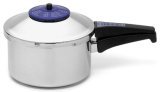
This summer I talked my wife into getting a pressure cooker. (She'd heard stories of them exploding from her grandmother as well, so it took a few years.) We ended up getting a Kuhn Rikon Duromatic 3.7-Quart Pressure Cooker, which seemed to have a couple of extra safety features, although I'm sure any modern one would be safe.
I'd wanted one just because I'm a midwestern boy and like my green beans thoroughly cooked, which takes a long time in a pan but only about three minutes in a pressure cooker. Since it was hot this summer, my wife went ahead and used the pressure cooker for a few other dishes--it cooks so quickly, it doesn't heat the kitchen up as much--and we were surprised to find the food turned out better. That prompted me to do a bit of research on pressure cookers.
Quick Physics Lesson
Remember from science class when they mentioned that the boiling point of water was 212°F at sea level? They had to mention the bit about sea level, because the boiling point of water depends on the air pressure. Inside a pressure cooker the pressure doubles, which raises the boiling point to 250°F. Higher temperature equals faster cooking.
Not Just Faster Cooking
A pressure cooker cuts the cooking time by two-thirds to three-quarters, saving time, money, and energy. They also make cheaper food taste great--they even make it healthier.
Save money
Besides the energy savings, you can also save money on ingredients. The heat and pressure combine to soften the fibers in foods, so tough cuts of meat come out wonderfully tender.
Save energy
The energy savings isn't much on a per-meal basis--not enough to balance the energy cost of making a large metal pot--but the cooker is an investment in energy savings. Cook with it day after day, week after week, and the energy savings add up. And there's no reason a pressure cooker can't last a generation or two. This is the sort of thing I was talking about last month when I suggested that you fix energy in tangible form.
As I mentioned, you also don't heat up the kitchen so much on hot days, which saves energy--and money--on air conditioning.
Great food
Ever noticed how some foods--stews, sauces, and the like--taste better as leftovers than when they were first served? The flavors just meld better after they're chilled and then reheated. Well, the pressure cooker gives you that flavor for the first serving. The pressure and the higher heat get the melding to happen faster.
Food cooked in a pressure cooker is also more nutritious. It's cooked with less liquid, which helps. Also, sealed in the cooker, it's less exposed to oxygen, so less of the vitamins and healthful pigments are lost in cooking.
Safety
My mom and grandmother both had stories of pressure cookers blowing up. Their stories were of accidents of the messy rather than dangerous variety, but they still gave one pause. Happily, the safety of pressure cookers has been considerably improved. (You never hear of them blowing up any more, and it's not just because hardly anyone uses them any more.) They have better valves, backup valves, and the seals are designed to let excess pressure escape rather than hold it in until there's an explosion.
There are plenty of good books on cooking with pressure cookers (and a new pressure cooker will come with a recipe book to get you started), but just a little experience using the pressure cooker will let you easily adapt your own favorite recipes for pressure cooking: Use a little less liquid, use cheaper cuts of meat, don't cook as long, and expect tender, flavorful food.
Tagged: Food and Drink, Green Living, Cooking, frugal pressure cooker recipes, save time, time saving






Disclaimer: The links and mentions on this site may be affiliate links. But they do not affect the actual opinions and recommendations of the authors.
Wise Bread is a participant in the Amazon Services LLC Associates Program, an affiliate advertising program designed to provide a means for sites to earn advertising fees by advertising and linking to amazon.com.


I got one for Christmas last year, and it can save you a few bills if you cook beans often. Most kinds of dry beans take less than half an hour to cook instead of a couple hours, so you can buy them in bulk instead of pre-cooked in cans.
I've also done a lot of canning this summer, and a pressure cooker/canner is necessary if you want to do any vegetables. Mine's a bit small and will only do pints, but so far I've got me some canned corn, beans, beets, and carrots.
I've always been intimidated by the explosion stories myself. Although I admit, I've secretly wanted to try one for years, despite that fact, for many of the reasons you listed above.
Glad to hear someone is having success with one.
I have a new pressure cooker that is unused (a Christmas present from my parents who bought it at some grand, once-a-year cookware sale). I remember all the rocking and shaking associated with them from my childhood and am intimidated by it. The recipe book that came with it is European and the ingredients specified are not widely available. If you have a simple recipe to share (a nice chicken stew perhaps or but green beans will do) with step by step instructions, I would most appreciate it.
My wife fixed this chicken dish with the pressure cooker recently, when she happened upon some cheap frozen chicken breasts:
In the pressure cooker, saute the chicken, onion, and mashed garlic cloves in a little olive oil.
Add the chicken stock.
If you put the potatoes or carrots on the bottom of the pan, they're prone to scorch, so put them on top of the chicken pieces. You want them cut up into fairly large pieces, or else they'll overcook in the pressure cooker.
Put on the pressure cooker lid and bring up to high pressure on high heat, then reduce heat to whatever will maintain the pressure (medium or thereabouts). This takes a bit of practice to do smoothly, but doing it unsmoothly doesn't make any difference to the result. Basically, turn the heat down and see if the pressure stays up. If it doesn't, bring the cooker back up to pressure and then turn it down less next time. If it does, try turning it down a bit more. Basically, you're looking for the lowest setting that maintains the thing at high pressure.
Cook at high pressure for 15 minutes.
Turn off the heat, but leave the cooker on the burner. (If it's a gas stove, maybe leave it cooking at pressure for an extra half minute.) Allow the pressure to release naturally. (That is, wait until the pressure gauge goes down (if it has one), or until it has quit hissing for a while. There are also "quick" pressure release, where you press a button to release the pressure (on some pressure cookers), or run cold water over the lid until the pressure comes down. It continues to cook while the pressure releases, though, so if you're going to do any of the quick release methods, you need to cook it at pressure for a little longer. I figure the natural pressure release method is the most energy efficient, even if it takes a few minutes longer.)
Remove the lid. Season to taste. (One of the cookbooks warned that dried herbs didn't do well in the pressure cooker--the heat and pressure blasts the flavor out of them--and said to add any dried herbs at the end.) I think we just added pepper and maybe a little thyme.
Makes about 4 servings.
The website of the company that made our pressure cooker has a recipes page.
A former neighbor used to make the best pinto beans in hers. We have been trying to eat more beans, lentils and rice. We purchased a rice steamer recently and love it. Rice can be prepped in the morning and timed to start cooking so it is ready to eat when you get home. We do lentils and split peas in our also. Supposedly you can do veggies or soups in it also.
We certainly would eat more things with beans if we could avoid the soaking and hours of cooking.
Thanks for the preesure cooker recipe; I'll try it within the week. I've got all the ingredients for the chicken stew so that should work well.
I have been using pressure cookers all my life, so did my mother and for all I know my grandmother. My first was my mother's and eventually I couldnt get the gaskets for it any more. I have had one large pressure cooker (I cook for 8) for 30 years and the smaller one for 15. Never had one blow up, either!
Any good recipies I just bought one and I am horrible at defrosting things!
Thank You :)
Gail
The Kuhn Rikon 5 Qt Duromatic Top Model is one of the best kitchen investments I have made. It works really well for cooking dried beans and soups. I use it at least once a week to make vegetarian meals.
I have been checking pressure cookers out and was curious to see how far they have come from what I remember of them as a kid. Good tips and comments, I will definitely take a look at getting one in the future.
Like severa other posts, I use one, my mother used one, and my grandmother used one. I never seen one explode...heard stories about them from those that did not use them... funny.... My mother and grandmother taught me at an early age to respect the power of one. So I have respect not fear for them. I love it because I can buy the cheapest, toughest piece of meat that can be cut with a butter knife when it is all said and done. My best memory is Sunday dinner after church Mom would cook roast, potatoes and carrots. Happy cooking :)
Have been on the fence about this and a rice cooker... Read this and came down from the fence. Found one on the local classifieds, AWESOME! Three days later... it's a nice way to cook. The time savings is absolutely golden. Think of the efficiency savings! It makes so much sense. Thanks for the push.
I love love love my pressure cooker. The thing I wanted to comment on, though, is all the mentions of rice cookers. Now, if you need rice to be ready when you get home, and don't want to microwave some rice stored in the fridge, then yes, it's a great idea. However, I like brown rice, something that few rice cookers do well. I was considering buying a new fancy rice cooker as mine didn't do brown well. Then I realized- my pressure cooker to the rescue! I cook a large batch of brown rice in it about twice a week, keeping it in the fridge to take out & microwave what I need at a time. I saved money on the new rice cooker, and even sold my old one!
I am from India and every home in India has pressure cookers. They have been popular in India for many many decades... last time when I went home I got one
Everyone loves them because they cook quickly and use less energy.
The problem with American / Chinese made cookers is that they don't whistle at reaching full pressure they only hiss the steam out. I heartily recommend the Hawkins pressure cooker- I guess my family has been using them for over 30 years !
As mentioned before, dry beans cook soo much quicker in a pressure cooker.
The tough cuts of meat come out so tender you won't want to buy the more expensive cuts.
A chicken comes out so tender and juicy.
Potatoes cook so quickly. Mashed potatoes in a jiffy :)
Erm, did I mention 'quick'? When cooking vegetables, just remember that they cook much quicker than usual, so the best ones are those that take longer to cook, like the dry beans and potatoes, beets and other root vegetables.
Soups come out tasting delicious - I just remembered my favorite - a simple chicken and leek soup. Mmm
If you have a larger pressure cooker, boiled/steamed turkey is soo juicy.
@Lacey: I hadn't thought of brown rice in the pressure cooker, but I'll give it a try.
My grandmother and mom always used them, never with any accidents, though everybody seems to know somebody who had one blow with spaghetti sauce all over the ceiling, ha-ha. I do great northern beans and green beans routinely, foolproof every time. Once in awhile over the years, I used to be able to pick up decent ones at garage sales or thrift stores with the seal and pressure thingy in good shape, but not lately. Also interesting, I've found a few of the little pressure cooker instruction/recipe booklets that used to come with the older better-made pressure cookers. My latest one is just not as heavy or nice though it works fine (Presto, 17 bucks for a small one at WalMart, and I hated buying it new).
This is off topic, but when I do hit the thrifts or garage sales, I'm always on the lookout for small kitchen appliances as I've always had pretty good luck with them. I've got a small backup collection of crock pots (these are great for the main course and dessert), percolators and found a swell electric skillet, hardly used, for a buck. My kinfolk and friends don't laugh anymore; I've given away some of my finds and most of the time, people say how much better the old stuff holds up and where did I find it.
i found this v useful, especially since i´ve just moved out of my parents´ after finishing college. i would just like to point out, however, that when u increse the pressure, the boiling point decreses hence you need less heat to achieve the same goal and, therefore, cooking is not only faster, it is cheaper as well.
You've got the pressure/boiling point relationship backwards. The boiling point goes down as pressure goes down and increases as pressure goes up. This is why folks who live in the mountains need to allow extra time for cooking since the boiling point could be just 175 degrees F instead of 212. The 175 degree water has less heat in it than the 212 degree water. Since you can't get the water temperature to be greater than the boiling point without raising the pressure, low pressure cooking takes longer than high pressure.
The phase change from water to vapor takes a LOT of energy, relatively speaking, so by INCREASE the pressure and INCREASING the temperature, you can put much more heat into the water before the phase change starts to occur.
Why aren't you supposed to cook split peas or lentils in pressure cookers? I have a bean soup I would like to try, but worry about the split peas in the mix. We live at about 8000 ft. altitude, and I fix navy and white beans with success in it and love it. I would like to try this bean soup, but know the pressure cooker directions say not to put split peas or lentils. Is there an explanation for this and any way around it or another way to fix that at this altitude? Thanks for any suggestions.
My pressure cooker just has a different "full" line if you're cooking lentils.
I think the issue is simply that lentils foam up a bit, meaning that there's a danger that the pressure control valve can get blocked. If you follow the instructions, and don't over-fill the cooker, it's safe enough.
By the way, this was in reply to Comment #16...